


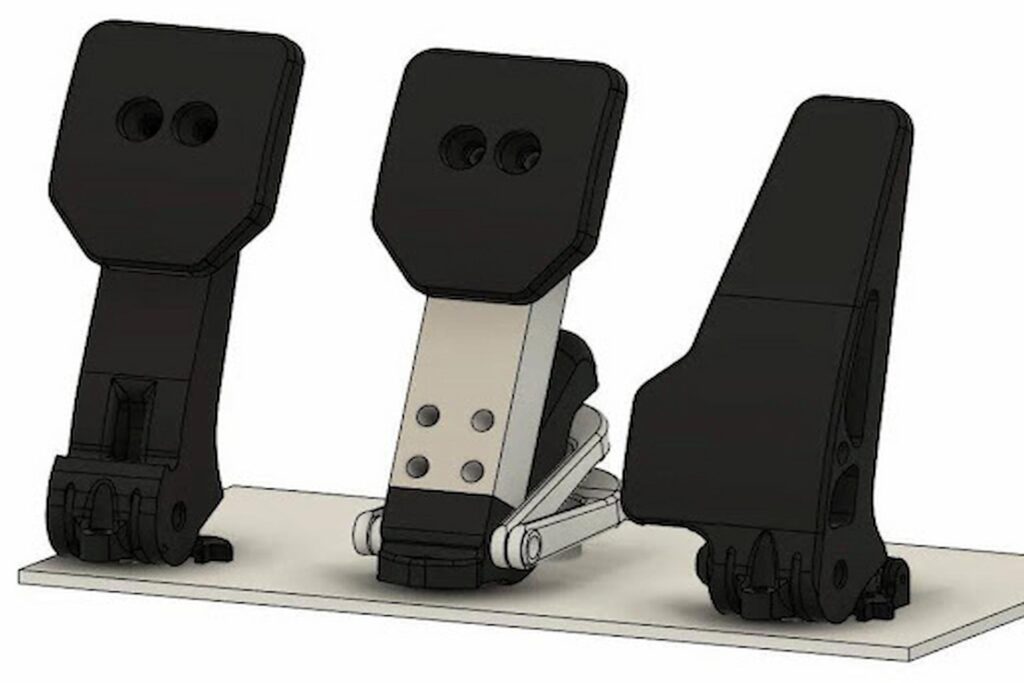
Ask any experienced sim racer what single upgrade transformed their lap times, and the answer is almost always the same: pedals. Wheels get the glory, and rigs grab the headlines, but pedals are where your driving actually happens. Every braking zone, every throttle application, every delicate trail-braking maneuver—all of it flows through your feet.
Yet pedals remain one of the most misunderstood components in a sim-racing setup, particularly when it comes to the technology underneath them. The debate between load cell and potentiometer pedals has been running for years, and for good reason. The difference between the two isn’t just technical, it fundamentally changes how you drive.
Whether you’re just getting started or looking to level up your setup, understanding this distinction is essential. Brands like Conspit have built their pedal ranges around these competing technologies, offering options across a wide spectrum of budgets and driving styles.
What Is a Potentiometer Pedal?
Potentiometers or “pot” pedals measure the position of the pedal. As you press the brake, a small electrical resistor tracks how far the pedal has travelled and translates that into a braking input.
This sounds perfectly logical. After all, you move the pedal, and the game responds. The problem is that it doesn’t reflect how real cars brake. In reality, a brake pedal compresses hydraulic fluid; it barely moves at all. What changes is the force you’re applying. A potentiometer setup completely ignores that force.
The practical consequence? Inconsistency. Because pot pedals respond to travel rather than pressure, even small differences in how you physically sit, how tense your legs are, or how fatigued you become mid-session can lead to wildly varying brake points. Muscle memory becomes difficult to build reliably.
That said, potentiometer pedals aren’t without merit. They’re generally more affordable, easier to set up, and perfectly serviceable for casual use or beginners finding their feet. If you’re racing once a week for fun, the limitations are unlikely to ruin your experience.
What Is a Load Cell Pedal?
A load cell pedal measures force rather than position. A strain gauge inside the pedal detects how hard you’re pressing, and that data, not travel distance, is sent to your simulator.
This is a fundamentally different experience. The brake pedal becomes stiff, mimicking the firm, hydraulic feel of a real race car. To brake at 100%, you push hard. To trail-brake into a corner, you feather the pressure precisely. Your foot starts behaving the way a real driver’s foot does.
The results are measurable. Drivers moving from pot- to load cell pedals typically report more consistent braking distances almost immediately. That consistency compounds over time your muscle memory locks in, your lap times stabilize, and the mental load of managing brake pressure reduces.
Load cell pedals do come at a higher price point, and there is a learning curve. The stiffer brake feel catches some drivers off guard initially, particularly those accustomed to long-travel pot pedals. A short adjustment period is normal, but most find they never want to go back.
The Feel Factor: More Than Just Technology
It’s easy to reduce this debate to a spec sheet, but the feel of a pedal goes beyond the sensor type. Factors like pedal weight, face texture, adjustable spring stiffness, and the geometry of the pedal plate all contribute to how a setup actually drives.
High-quality load cell pedals often include adjustable brake stop positions and swappable spring combinations, allowing you to dial in the exact resistance profile that suits your driving style. Some drivers prefer an extremely firm brake; others want a small amount of travel combined with force measurement, the so-called “progressive” feel.
Throttle and clutch pedals are also worth considering as a complete set. A well-matched trio of pedals creates a cohesive experience, and many manufacturers design their ranges accordingly.
Which Should You Choose?
The honest answer depends on your goals and your budget.
If you’re a casual or beginner sim racer, start with a decent potentiometer set. Focus on learning the fundamentals of racing: lines, racecraft, and tire management. You’ll extract far more performance from understanding those concepts than from upgrading hardware prematurely.
If you’re serious about improving lap times, a load cell brake is transformative. The consistency it provides is genuinely difficult to achieve with position-based sensors, particularly in high-pressure online racing or time trial environments.
If you’re somewhere in between, consider a hybrid approach. Some mid-range pedal sets pair a load cell brake with potentiometer throttle and clutch, striking a balance between feel and cost.
Setting Up Your Pedals Correctly
Whichever technology you choose, calibration matters enormously. A load cell pedal set up with incorrect sensitivity settings will feel mushy and imprecise. Spend time in your simulator’s settings adjusting brake linearity curves and saturation points until the pedal response feels natural.
Physical installation is equally important. Pedals mounted at the wrong angle or too close together will create discomfort over long sessions and inconsistent inputs. Most quality rigs offer full adjustability.
The Bottom Line
The gap between the load cell and the potentiometer pedals is real, and once you’ve driven on a quality load cell setup, it’s very hard to compromise on it. That said, the best pedal is the one you use consistently, calibrated well, and matched to a rig and wheel that complements the package.
Sim racing rewards feel, consistency, and precision, and your pedals sit at the very heart of all three. Invest wisely, take time to dial in your setup, and your lap times will thank you for it.